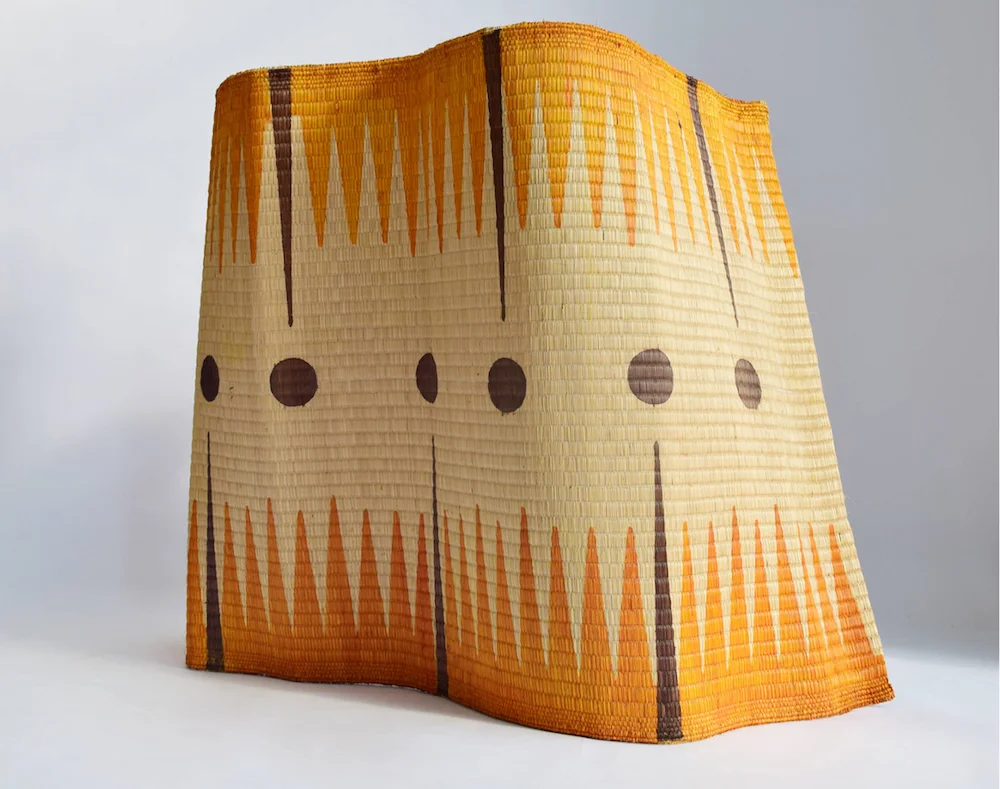
Sharp geometric aesthetics breathe new life into a traditional item. Photography by Linh Trinh & Cat Nguyễn.
LAITA’s Distinct Alchemy Transforms A Traditional Vietnamese Object Using Bauhaus Design
Saigon. It is one of the fastest developing cities in Asia. Yet nestled amongst the skyscrapers are buildings influenced by the curves of European architecture, made popular in the early 20th century.
It is in this bustling metropolis that LAITA reside. In a city which races towards the modern and simultaneously heralds its past, this up and coming design collective aims to bring together the old and the ordinary in a brand new and unique style. Launched in September 2018, LAITA are enthusiasts of creativity with a portfolio spanning architecture, graphics, furniture and product design. Through their innovative compositions they breathe new life into the familiar and speak directly to the hearts and souls of their audience. “Our mission is to show the world that household objects can be unorthodox and functional, beautiful and practical. We want the everyday to feel imaginative” says Hòa Nguyễn from LAITA.
The first product announced from their debut collection is the Chiuchiu Murals. The name is derived from Chiếu, Vietnamese for the beloved household mat. This versatile mat has been used in the region for centuries, acting as a floor-dining space, or as somewhere to sleep. It is a common symbol of Vietnam, frequently employed in depictions of the country.
LAITA have collaborated with Vietnam’s noted regional manufacturer’s to honour this humble object’s origins. Made with sedge (a grass-like plant), this distinctively designed item creates a new cadence in sedge-making, illustrating that even old techniques can be reborn.
The birth of the Chiuchiu Mural is a simple story that starts in the fields of Thanh Hoa province where the grass is grown. It is then dried, steamed, dyed and hand-printed in Hoa Binh, using the same 200-year-old ancient techniques that have made these regions famous. “The Chiuchiu Murals are important to us on so many levels. As a symbol of our heritage, we wanted to make sure that we worked with the same people that have been pioneering this technique for centuries. We want our products to be authentic, as well as creative” says Nguyễn.
What thrusts this product firmly into the spotlight is it’s striking Bauhaus patterns. Working with graphic designer Linh Trinh, LAITA combine European-born Bauhaus and the Vietnam-born mat in an apt composite. It is fitting that the first item from LAITA’s collection is marked by a dedication to transcending cultural barriers, offering harmony between function and design.
Seven stunning versions of the Chiuchiu Mural are currently on offer, all adorned with shapes in tropical colours. Ochre yellows, deep reds, velvety browns, and leaf greens combine in a unique smattering of crisp geometric configurations, all holding a deeper connection to the past of Vietnam and to the future of this rising design collective.
Through a distinct alchemy, LAITA embolden the well-trodden Chiếu, evolving it into a characteristic piece that can adorn any wall or floor of a contemporary home.
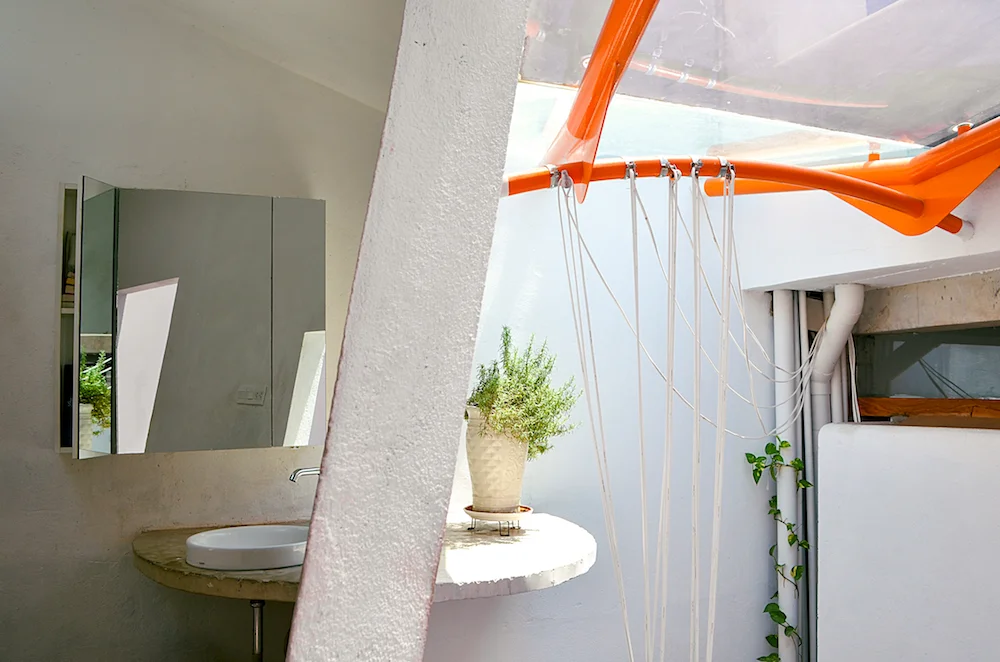
A circular shelf cuts through the bathroom wall on the second floor of House 49. Photography by Camille Diquélou.
LAITA’s House 49 is filled with light and extraordinary details
House 49 is a unique two bedroom home, designed with quirky details, natural light and earthy materials.
Set in a residential hem, or alleyway, the house’s exterior structure assimilates into the traditional style of the street, but with a few features that signal something special. Small windows protrude angularly from the upper planes, a vine plant dangles down the exterior wall and a wooden door with a stylish log shaped handle marks the entrance into the house.
Designed by LAITA’s Nguyễn Dinh Hoa, House 49 is split over four levels. It is an elegant, striking and open-plan space. Stretching across 151.7m2, it comprises of a kitchen-dining room, living room, two bedrooms, two bathrooms and a roof terrace.
From the outside House 49 - named after the hem it inhabits - appears as an enclosed fortress, purposefully lacking traditional windows in order to keep the Saigon heat at bay. Despite not having a single glass window, the house is completely full of natural light. It spills from a large skylight at the top of a central stairwell and peppered throughout the house instead of customary windows are shapely circular or crescent cavities which bring even more sunlight, as well as air in. There is not a single dark space here. ‘Light is an extremely important aspect of this property. We wanted the space to be breathable, to take a cue from nature and be in constant dialogue with the outside world,’ says lead designer Nguyễn Dinh Hoa.
LAITA extend this idea by using only natural earthy materials. White concrete covers the exterior and the interior which allows the natural light to move around easily. Pink speckled granite is used for the much of the floors, with LAITA giving definition to the living room and bedrooms by utilising a light-toned hardwood.
There is a breezy flow to the layout of House 49. The upper floors are split level and the transient hallway spaces between the bedrooms are contained with softly curved half-walls, emphasizing the feeling of open-ness. The location and design of all of the stairs in the house are completely unique. A gently sloping ramp beckons you into the master bedroom through the centre of the house, the stairs up to the roof terrace are a narrow walkway, tucked into the back of the building, whilst the stairs that lead you upwards from the ground floor are wide and broad.
House 49 hosts a myriad of quirky details. On entering you are met with a walking stick with a curved wooden handle, which provides necessary bannister support up a flight of stairs.
The shared bathroom on the second floor has an open window, with a circular shelf that passes through the bathroom wall into the central stairwell, again allowing more natural light to diffuse through. Tucked behind the kitchen is a small interior garden, complete with thoughtfully planned drainage and an open skylight, and the two doorways to the downstairs bathroom and toilet each have their own unique geometric interpretation. House 49 not only combines stylish functionality with air and space but also brings in a playfulness to the abode. ‘House 49 should feel like a secret to its visitors. Everyone who comes here should feel as though they are having a totally unique experience.’
Dinh Hoa fastidious fascination to detail is further observed in the construction of the walls, the doorways and the windows in House 49. Look carefully and you will note that there are very few straight vertical lines in the space. The exterior window from the master bedroom balcony sits at a jaunty angle, as does doorway to the shared split-level space in the upper-floor hall, and the ceiling in the kitchen. These unconventional touches are distinctive markers of LAITA’s design ethos.
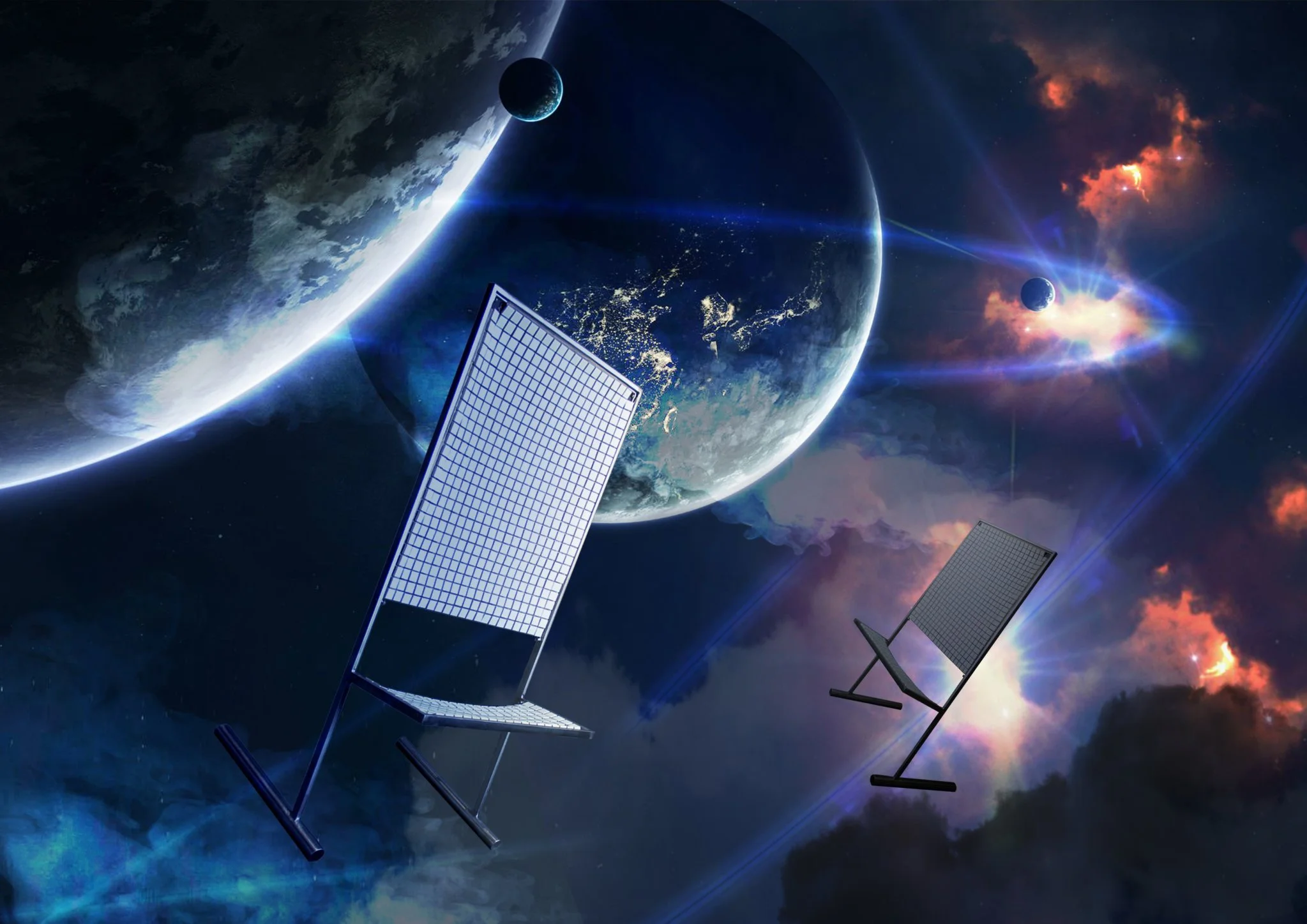
Image created by Phuong Anh and Thai Hang.
LAITA exhibit their collaborative WHITE MOSAIC range
Saigon-based design collective LAITA debut their inspired WHITE MOSAIC range at a one-off exhibition.
Created in collaboration with INAX, a Japanese sanitary-ware and artistic ceramic tiles manufacturer, WHITE MOSAIC is a furniture collection focussing on minimalism. Inspired by the 1968 Grid System - an anti-architectural proposal by Superstudio, LAITA have designed a range which supersedes our traditional expectations of the white tile. ‘The white tile is a fairly common design material. We wanted to explore it in an unexpected way. We were drawn to its ability to be neutral and abstract,’ says LAITA’s Bui, Minh Tuong.
LAITA have created an entire collection which puts the simple elegant lines of a bathroom tile at the centre of design. Each individual item is created by a different member of the collective, together they present the white tile as a powerful metaphor. Adorning chairs, lamps, notebooks vases, mirrors and storage, it allows for negative space, so that the imagination may fill it in. LAITA are exploring the relationship between the mind, furniture and both of their boundless limits. A space-ly, retro feel imbues each of the products, as they take us on a new journey of what a material can be. ‘Space is such a vast entity; we were really inspired by the 1960’s space race, and all of the potential for new ideas, new concepts and new way of life that people of that time must have felt’ says LAITA’s Nguyễn Thi Thai Hang.
As well as being stylish and meaningful, the collection is also functional. LAITA have carefully chosen materials to ensure that each item is perfectly usable. A tile can be a weighty, heavy material but LAITA combine it with foam for the chairs and storage pieces, ensuring that these items remain completely lightweight and comfortable. ‘The combination between tiles and foam is innovative and part of our creative work. It’s lightweight but still has a strong structure,’ says Nguyễn.
Other products in this range include a double-sided mosaic-on-mesh deck chair, a decorative screen, again the tiles are set into mesh, which allows for soft light to fall through the negative space; a vase and a lamp, which at first glance looks like a pillow. Press it gently though and it lights up. LAITA subvert the idea of what a product is, forcing the viewer to look at the items in a new light.
This radical subversion of forms is echoed in the exhibition which LAITA used to debut the range earlier this year. As visitor’s maneuver around the individual pieces, Superstudio’s Continuous Monument is played on a loop projected onto a wall of the exhibition space. At the final item, a large circular chair covered in the eponymous white mosaic tiles, visitors were invited to take a seat. Placed on the ground in front of the chair is a large white-tile-mosaic mirror tray, in which you could comfortably view Superstudio’s video on radical architecture. This culminates in a unique immersive experience; unusual for a product and furniture design company, but maybe less unusual for LAITA.
Taking inspiration from revolutionary sources LAITA set out to transform our understanding of what materials can be.